Friday, July 3, 2026 · U.S. Edition Today's Paper Latest Headlines
Advertisement SPONSORED
VANTAGE CAPITAL
Built for what comes next. Private banking for ambitious balance sheets.
Open an account
The Index Today.
Vol. III · No. 184 · Today's Front Page
Markets Pulse · live · what do these signals mean?
MARKETS PULSE
$ ▲ +0.0% MED 14s CONF 80.00
BREAKING
$ ▲ +0.0% MED 14s CONF 80.00
$
$▲ +0.0%MED 14s·CONF 80.00

Nvidia’s $57 Billion Quarter Reignites the AI Bubble Debate

Nvidia posted record quarterly revenue of $57 billion, up 62%, reigniting debate over whether the AI boom is a sustainable bull market or an inflating bubble.

$▲ +0.0%MED 14s·CONF 80.00
Execution price · last 6 hoursvia TimePay LPM
-6h-4h-2hnow
SettlementTimePay 30s spot·Cash $1.00·TPC 10 credits
theindextoday Photo

Nvidia just delivered another blowout, and reignited a fierce debate. The chip giant posted record quarterly revenue of $57 billion, up roughly 62% year over year, underscoring insatiable demand for AI hardware. Yet even as the numbers dazzle, the result has reopened the central question hanging over the market: is the AI boom a durable…

🔒 Subscribe to keep reading 5 min read 5 min

Nvidia just delivered another blowout, and reignited a fierce debate. The chip giant posted record quarterly revenue of $57 billion, up roughly 62% year over year, underscoring insatiable demand for AI hardware. Yet even as the numbers dazzle, the result has reopened the central question hanging over the market: is the AI boom a durable bull run, or an inflating bubble waiting to pop?A record quarterThe growth is staggering. Nvidia's fiscal Q3 revenue hit an all-time high of $57 billion, up about 62%, with earnings per share rising 67%. The figures reaffirm Nvidia's dominance in AI accelerators and its position as the single most important company in the technology supply chain.The market's heavyweightNvidia carries the indexes. The stock accounts for nearly a fifth of the S&P 500's more than 8% advance this year, making its fortunes inseparable from the broader market's. When Nvidia moves, the whole market feels it — concentrating risk in a single name to an unusual degree.The bubble questionOpinions sharply diverge. Some investors argue valuations are not at discomforting levels relative to Nvidia's earnings and cash flow, insisting demand is real and the boom justified. Others warn that fears of an AI bubble, rising competition and geopolitical uncertainty are real risks — and the stock has stayed rangebound, up just 10% over six months.The spending behind it allDemand rests on giant budgets. The four biggest spenders — Amazon, Alphabet, Microsoft and Meta — are planning as much as $725 billion in capital expenditures this year, with chips a huge part. Nvidia's results are a direct read on whether that historic buildout continues — or eventually slows.Competition and riskThe throne is contested. Rivals are racing to chip away at Nvidia's commanding share, while geopolitical tensions cloud the outlook for sales and supply. Even a dominant leader faces threats that could temper growth, adding to the uncertainty beneath the record headline numbers.Why it mattersNvidia is a barometer for the entire AI economy. Its results signal whether the spending fueling the boom is sustainable, and its valuation shapes sentiment across markets. The debate over bubble versus boom is really a debate over whether the AI buildout will keep paying off — with enormous stakes for investors and the industry.The bottom lineNvidia's record $57 billion quarter showcases relentless AI demand while reigniting the bubble debate that shadows the market. With the company anchoring the indexes and hundreds of billions in capex riding on continued growth, the question of boom versus bubble has never mattered more. For now, the numbers impress — but the doubts persist.

You own this article
$
$▲ +0.0%MED 14s·CONF 80.00

The Federal Reserve’s Paralysis Problem: Why Powell Can’t Cut, Can’t Hike, and Is Running Out of Time

$▲ +0.0%MED 14s·CONF 80.00
Execution price · last 6 hoursvia TimePay LPM
-6h-4h-2hnow
SettlementTimePay 30s spot·Cash $1.00·TPC 10 credits
Photo

With inflation stuck above target, unemployment creeping higher, and an election cycle turning every word into a political football, the Fed finds itself in the most uncomfortable position it has occupied in a generation. Jerome…

🔒 Subscribe to keep reading 5 min read 5 min

<em>With inflation stuck above target, unemployment creeping higher, and an election cycle turning every word into a political football, the Fed finds itself in the most uncomfortable position it has occupied in a generation.</em>

Jerome Powell has been in tighter spots. But not many.

You own this article
$
$▲ +0.0%MED 14s·CONF 80.00

The Office Debt Cliff: How $1.5 Trillion in Commercial Real Estate Loans Is About to Hit a Wall

$▲ +0.0%MED 14s·CONF 80.00
Execution price · last 6 hoursvia TimePay LPM
-6h-4h-2hnow
SettlementTimePay 30s spot·Cash $1.00·TPC 10 credits
Photo

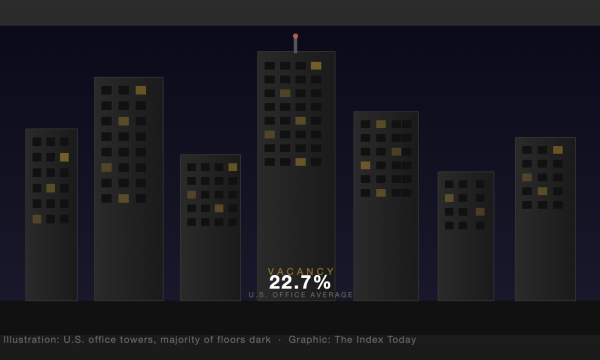
Post-pandemic office reckoning underestimated. Bill now due. Loan maturities + closed refinancing market + record vacancy = one of largest credit events in commercial property history. $1.5 trillion CRE debt matures in US through end-2027.…

🔒 Subscribe to keep reading 5 min read 5 min

Post-pandemic office reckoning underestimated. Bill now due. Loan maturities + closed refinancing market + record vacancy = one of largest credit events in commercial property history.

$1.5 trillion CRE debt matures in US through end-2027. Originated under cheap money, full offices, rising rents — none of which hold now.

You own this article
$
$▲ +0.0%MED 14s·CONF 80.00

Apple’s $4 Billion Bet on Neural Silicon: How the M4 Ultra Is Quietly Rewriting the AI Hardware Race

$▲ +0.0%MED 14s·CONF 80.00
Execution price · last 6 hoursvia TimePay LPM
-6h-4h-2hnow
SettlementTimePay 30s spot·Cash $1.00·TPC 10 credits
Photo

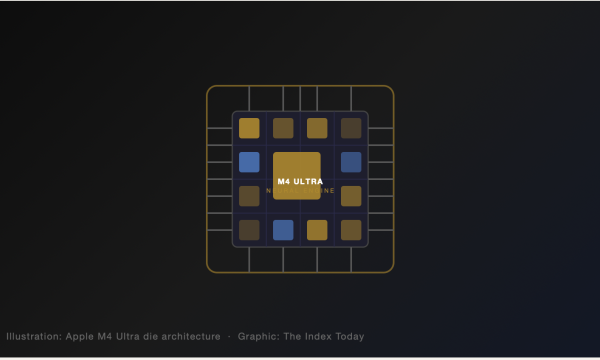
While Nvidia dominates the data-centre conversation, Apple has been building something more subversive — a vertically integrated AI compute stack aimed squarely at the enterprise desktop and the professional edge. The M4 Ultra is the…

🔒 Subscribe to keep reading 5 min read 5 min

<em>While Nvidia dominates the data-centre conversation, Apple has been building something more subversive — a vertically integrated AI compute stack aimed squarely at the enterprise desktop and the professional edge. The M4 Ultra is the opening shot.</em>

The war for AI compute supremacy has, until now, been fought in the data centre. Apple is about to open a second front.

You own this article
$
$▲ +0.0%MED 14s·CONF 80.00

Brussels vs. Big Tech: EU’s AI Rules and Record Fines Close In

The EU is tightening the screws on Big Tech, with AI Act transparency rules due in August and record antitrust fines piling up as Washington threatens retaliation.

$▲ +0.0%MED 14s·CONF 80.00
Execution price · last 6 hoursvia TimePay LPM
-6h-4h-2hnow
SettlementTimePay 30s spot·Cash $1.00·TPC 10 credits
theindextoday Photo

Europe is sharpening its role as the world's toughest tech regulator. The EU's AI Act transparency rules take effect in August 2026, fresh guidance is landing this quarter, and a wave of record antitrust fines…

🔒 Subscribe to keep reading 5 min read 5 min

Europe is sharpening its role as the world's toughest tech regulator. The EU's AI Act transparency rules take effect in August 2026, fresh guidance is landing this quarter, and a wave of record antitrust fines is hitting the biggest American tech firms. As Brussels ramps up enforcement, Washington is calling it economic warfare — setting up a transatlantic clash over who sets the rules for AI and digital markets.The AI Act bitesNew rules are imminent. The AI Act's transparency obligations come into force in August 2026, with support guidelines on transparent AI systems due this quarter after a May political agreement on simplification amendments. The framework pushes companies to disclose how their AI systems work.Record DMA finesPenalties are mounting. Under the Digital Markets Act, the EU fined Apple €500 million over App Store rules and Meta €200 million over its consent-or-pay ad model. The enforcement signals Brussels will punish non-compliance with the bloc's gatekeeper rules.The adtech hammerAntitrust is biting too. Google was hit with a €2.95 billion fine for distorting competition in advertising technology, and X drew a €120 million penalty over transparency breaches. The scale shows regulators willing to impose huge costs on dominant platforms.Cloud is nextThe frontier is shifting. Regulators opened gatekeeper probes into Amazon and Microsoft over cloud computing, signaling the next enforcement battleground. As AI workloads run on a few cloud providers, Brussels is scrutinizing concentration in that layer.Washington pushes backThe fight is geopolitical. The Trump administration views EU tech rules as economic warfare aimed at American firms, and has threatened tariffs in response to fines. The standoff turns regulation into a trade and diplomatic flashpoint.A global templateEurope sets the pace. With the AI Act, Digital Services Act and DMA, the EU has built the world's most comprehensive tech rulebook, influencing how companies operate far beyond Europe. Other jurisdictions watch Brussels as a model — or a cautionary tale.Why it mattersThe stakes are global. How Europe enforces AI transparency and competition rules shapes product design, disclosure and market structure worldwide, while the US clash adds trade risk. The outcome will influence how AI and digital platforms are governed everywhere.The bottom lineThe EU's AI Act transparency rules arrive in August and record DMA and antitrust fines are piling up on Apple, Meta and Google, even as Washington threatens retaliation. Brussels is doubling down as the globe's tech enforcer. The regulatory showdown is intensifying.

You own this article
$
$▲ +0.0%MED 14s·CONF 80.00

FabTwin: Nvidia and TSMC Bring AI Inside the Chip Factory

Nvidia and TSMC are pushing AI deep into chip manufacturing, using a digital twin called FabTwin to simulate fabs before they are built.

$▲ +0.0%MED 14s·CONF 80.00
Execution price · last 6 hoursvia TimePay LPM
-6h-4h-2hnow
SettlementTimePay 30s spot·Cash $1.00·TPC 10 credits
theindextoday Photo

The AI boom is now reshaping how the chips behind it are made. Nvidia and TSMC have announced a push to bring artificial intelligence and accelerated computing deep into semiconductor design and manufacturing — including…

🔒 Subscribe to keep reading 5 min read 5 min

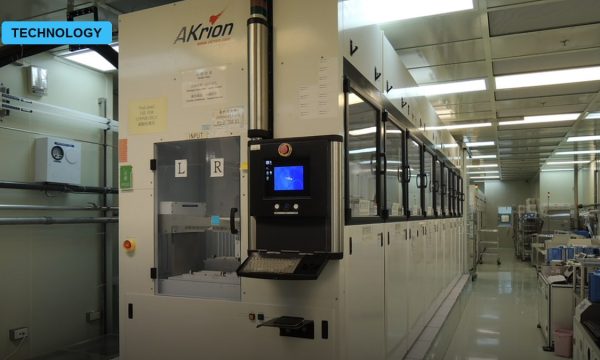
The AI boom is now reshaping how the chips behind it are made. Nvidia and TSMC have announced a push to bring artificial intelligence and accelerated computing deep into semiconductor design and manufacturing — including a virtual factory called FabTwin. The collaboration turns the world's leading chipmaker into a testbed for AI-driven production, signaling a shift in how the most advanced fabs are planned and run.A digital twin of the fabThe centerpiece is simulation. TSMC is exploring Nvidia Omniverse technologies to build FabTwin, a virtual environment that mirrors a real fabrication plant. The digital twin lets engineers model the factory before a single machine is installed, shifting key decisions into software.Testing before buildingThe payoff is foresight. FabTwin is designed to simulate fab layouts and manufacturing workflows, letting TSMC digitally test different factory configurations and identify bottlenecks early. Catching problems virtually can save enormous time and cost versus fixing them on a live production line.AI in design tooThe effort spans the pipeline. Nvidia says TSMC is using its accelerated computing and AI to advance both semiconductor design and manufacturing, not just factory planning. AI tools increasingly assist the intricate work of laying out and optimizing cutting-edge chips.Why fabs are so hardChip plants are among the most complex facilities on Earth. A modern fab packs thousands of precise, interdependent steps, and any bottleneck ripples across output. Modeling that complexity digitally offers a way to tame a notoriously unforgiving manufacturing process.A symbiotic loopThe relationship is self-reinforcing. Nvidia's chips power the AI that now helps TSMC build better chips, which in turn enables more powerful AI. The partnership captures how AI has become both the product of advanced fabs and a tool for improving them.The competitive stakesEfficiency is a weapon. With demand for AI accelerators surging, squeezing more yield and speed from fabs is a strategic advantage. AI-driven manufacturing could help leaders like TSMC stay ahead as rivals race to expand capacity.Why it mattersThis is the industrial side of the AI boom. As AI moves from the data center into the factory, it reshapes how the underlying hardware is built, planned and optimized. Smarter fabs mean faster, cheaper, more reliable chips — the foundation everything else depends on.The bottom lineNvidia and TSMC are bringing AI deep into chip manufacturing, with a FabTwin digital twin that simulates fabs before they are built and AI tools aiding design. The move shows AI reshaping the factories that make it possible. The chip industry is building smarter from the ground up.

You own this article
$
$▲ +0.0%MED 14s·CONF 80.00

Federal Override: Trump’s AI Order Moves to Preempt State Laws

A new White House executive order pushes a uniform federal AI framework that could override state laws, setting up a clash just as Colorado's AI Act takes effect.

$▲ +0.0%MED 14s·CONF 80.00
Execution price · last 6 hoursvia TimePay LPM
-6h-4h-2hnow
SettlementTimePay 30s spot·Cash $1.00·TPC 10 credits
theindextoday Photo

The fight over who governs artificial intelligence is heading for a showdown. A White House executive order issued on June 2 promotes a uniform federal AI framework designed to preempt state laws deemed inconsistent with…

🔒 Subscribe to keep reading 5 min read 5 min

The fight over who governs artificial intelligence is heading for a showdown. A White House executive order issued on June 2 promotes a uniform federal AI framework designed to preempt state laws deemed inconsistent with national policy, escalating tension between Washington and statehouses. The timing is pointed: Colorado's landmark AI Act is set to take effect on June 30, putting the federal-versus-state collision into sharp relief.The order's aimThe push is for one rulebook. The June 2 action, titled around advancing AI innovation and security, builds on a December 2025 executive order seeking a uniform federal policy framework that overrides state AI laws judged inconsistent with it. The goal is to spare developers a patchwork of conflicting state rules.Colorado's deadlineA major state law looms. The Colorado AI Act, effective June 30, requires developers and deployers of high-risk AI systems to use reasonable care to protect consumers from algorithmic discrimination. It is among the most far-reaching state measures and a prime target in the preemption debate.A patchwork problemStates have moved fast. With Washington slow to legislate, states have advanced their own AI rules on transparency, bias and disclosure, creating a fragmented landscape. Industry argues that compliance across dozens of regimes is costly and chills innovation, favoring a single federal standard.Power for the buildoutInfrastructure is part of the plan. The administration is promoting policies to fuel AI growth, including easing restrictions on nuclear power for data centers. Yet some states are imposing barriers on data-center electricity access, adding another front in the federal-state friction.A lighter touchThe regulatory mood favors restraint. Senator Ted Cruz has pushed for a light-touch AI regime, and the administration is reorienting antitrust enforcement toward consumer harm rather than broad structural goals. The posture signals a preference for innovation-first rules over aggressive oversight.The legal fight aheadPreemption will be contested. States are likely to argue they retain authority to protect their residents, setting up court battles over how far federal policy can override local AI laws. The outcome will shape whether companies answer to one standard or many.Why it mattersThe stakes are foundational. Whoever sets the rules — Washington or the states — will define how AI is built, disclosed and deployed across the economy. The preemption push could streamline compliance for developers while igniting a constitutional tug-of-war over regulatory turf.The bottom lineTrump's June 2 executive order advances a uniform federal AI framework aimed at preempting inconsistent state laws, just as Colorado's AI Act takes effect June 30. The collision sets up a defining battle over who governs artificial intelligence. The federal override is on a path to the courts.

You own this article
$
$▲ +0.0%MED 14s·CONF 80.00

Fold Wars: Apple’s First Foldable iPhone Takes On Samsung

Apple's first foldable iPhone is expected in September 2026, setting up a high-stakes showdown with Samsung in the maturing foldable-phone market.

$▲ +0.0%MED 14s·CONF 80.00
Execution price · last 6 hoursvia TimePay LPM
-6h-4h-2hnow
SettlementTimePay 30s spot·Cash $1.00·TPC 10 credits
theindextoday Photo

The foldable phone wars are about to get their biggest entrant. Apple's first foldable iPhone is expected to debut in September 2026, finally pitting the company against Samsung, which pioneered the category years ago. With…

🔒 Subscribe to keep reading 5 min read 5 min

The foldable phone wars are about to get their biggest entrant. Apple's first foldable iPhone is expected to debut in September 2026, finally pitting the company against Samsung, which pioneered the category years ago. With a book-style design, premium price and Samsung ironically supplying key parts, the iPhone Fold sets up a high-stakes showdown that could reshape the premium smartphone market.Apple's foldable arrivesThe long wait nears its end. Apple's foldable iPhone is on track for a September 2026 introduction alongside the iPhone 18 Pro line. After years of rumors, Apple's entry marks a major moment for a category it has watched rivals develop while it stayed on the sidelines.The specsIt is a premium device. Reports point to a roughly 7.8-inch inner display, a next-generation A20 chip, dual 48MP cameras and a price near $2,000. The book-style design, wider than tall with an iPad-like aspect ratio, aims for a crease-free screen — a key engineering challenge.Taking on SamsungThe pioneer faces the giant. Samsung, which launched foldables years ago and is readying its next Galaxy Z Fold, now confronts Apple in a category it built. Ironically, Samsung is also a critical supplier of foldable display components, profiting even as it competes.Production challengesFolding phones are hard to build. Achieving a durable, crease-free folding display at Apple's quality bar poses real manufacturing hurdles, and reports flag production challenges ahead of launch. Execution will determine whether Apple's debut delights or disappoints.A maturing categoryFoldables are going mainstream. Once a niche, folding phones have matured in design and durability, and Apple's entry could accelerate mainstream adoption. The category's evolution reflects the search for the next form factor as traditional smartphones plateau.Why it mattersApple defines categories it enters. Its foldable could legitimize and expand the market, pressure rivals and set new standards — or reveal the limits of folding tech. With over a billion iPhone users, Apple's move carries outsized weight for the future of the smartphone.The bottom lineApple's first foldable iPhone, expected in September 2026 with a 7.8-inch screen and a near-$2,000 price, sets up a high-stakes showdown with category pioneer Samsung. As foldables mature toward the mainstream, Apple's entry could reshape the premium market. The fold wars are about to begin in earnest.

You own this article

Explore The Index Today

Reviews and recommendations from across the newsroom.

AdvertisementSPONSORED
The Most Tax-Efficient Way to Transition a $10M Portfolio Is Not What Most Advisors Recommend
Our whitepaper explains the three-stage method that preserves an additional 2.1% annually against traditional rebalancing.
Clearwater Capitalclearwatercapital.com
Opinion
Your Library 0
No articles purchased yet.
DZ
Demo User
ZZAZZ Member
TPC Balance
2,880TPC
Articles owned0
TimePay earned142 TPC
The Index Today.